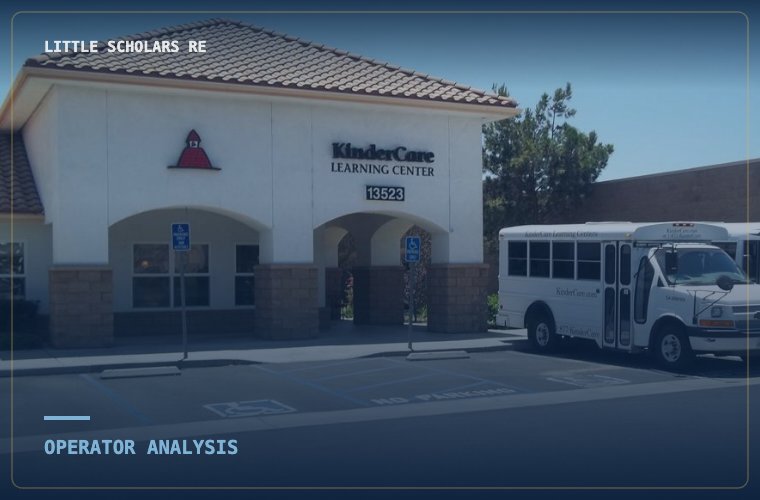
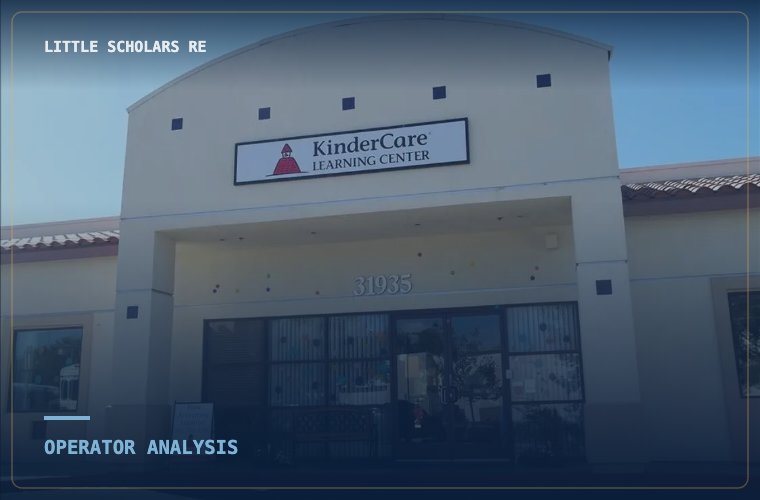
Both public operators reported Q2 2026 in the past three weeks. KinderCare is closing 80–85 centers this year and put a number on breakeven occupancy; Bright Horizons is climbing back toward 70% occupancy and 10% margins. Here's what their calls tell center and property owners.
Two reports, one market signal
KinderCare (NYSE: KLC) reported second-quarter 2026 results on August 13: revenue of $697.5 million, down 0.4% from a year ago, with a net loss of $8.8 million and adjusted EBITDA of $63 million versus $82.4 million last year. Same-center occupancy came in at 68.6%, down 240 basis points year over year. The stock fell roughly 22% after hours on the guidance cut.
Bright Horizons (NYSE: BFAM) reported on July 30 and told a recovery story: revenue up 7% to $779 million, adjusted EPS up 20%, and occupancy averaging in the high 60s — about 70% excluding its troubled Australia operations. Read together, the two calls carry more useful information for center owners than any industry survey published this year.
The headline: 80–85 KinderCare closures in 2026
KinderCare closed 49 centers in the second quarter — about 3% of its footprint — and expects 80 to 85 closures by year-end, with most of the remainder in the fourth quarter. The centers closed so far averaged below 37% occupancy, and roughly nine out of ten came from the bottom performance quintile. Management expects the program to cut annualized revenue by about $57 million while adding $8 million to adjusted EBITDA.
The real estate consequence: KinderCare has identified about 36 lease exits and budgeted $20–25 million in lease-exit payments, some extending into 2027. That is dozens of purpose-built, licensed childcare buildings going dark this year, many with landlords holding a buyout check and an empty box. And the CFO was direct that this isn't a one-time event: the company anticipates closing more centers next year, as it has every year since at least 2014.
A breakeven number, from the largest operator
The most quotable disclosure came in the Q&A. Asked how the company decides which struggling centers to keep, CFO Tony Amandi said KinderCare has "always talked about getting to about 45% to 50% is generally breakeven for a center." That is the clearest public statement on record of where a center stops losing money at national-chain cost structures.
For an independent owner, that number cuts two ways. It shows how much fixed cost a large operator carries — many independents break even lower because owner-operators take compensation out of profit rather than payroll. But it also frames the occupancy math every buyer and lender will apply to your center: below roughly 50%, a center is presumed to be losing money until proven otherwise; the healthy centers that command premium multiples run far above it.
How KinderCare decides what to close
Management described the screen in detail: every center is scored against the same demographic model used to underwrite new builds, then reviewed for inquiry volume, engagement, and financial trend. Crucially, they map a 10-to-15-minute drive time around each flagged center looking for a nearby "magnet" center that can absorb its families and staff.
The CEO was candid about the root cause: some of these buildings are 30, 40, even 50 years old, in neighborhoods families have migrated out of. That's a real estate diagnosis, not an operating one — and it's the same demographic screen we run when evaluating a site. Location and rooftops decide a center's fate long before management skill does.
Growth is coming from price, not enrollment
KinderCare's early-education revenue fell 1.5% in the quarter as a 4% enrollment decline was only partly offset by a 2.6% tuition increase. The company also trimmed its full-year tuition assumption from 3% to 2.5%, saying state subsidy reimbursement rates are rising more slowly than expected — a headwind it says could persist into the first half of 2027.
Bright Horizons is running the same play from a stronger position: average price increases of about 4% for the year, deliberately ahead of wage growth, with enrollment in mature centers up about 1% excluding Australia. Both operators are defending revenue with rate. For owners, that's a double-edged benchmark — tuition pricing power remains real, but no one at national scale is growing enrollment right now.
Bright Horizons' occupancy distribution is the stat to remember
Bright Horizons disclosed its portfolio mix: 53% of its centers now run above 70% occupancy, while the cohort below 40% occupancy shrank to 5% of centers from 10% a year ago — through a combination of enrollment recovery and closing underperformers. The CFO flagged another 25–50 centers as likely closure candidates through 2028.
Its full-service childcare segment posted a 7.9% adjusted operating margin, with management describing a path back to its historical 10% target. Let that sink in: the best-run national operator targets 10 cents of operating profit per revenue dollar on center-based care. Well-run independent centers routinely show owner earnings well above that — which is precisely why platform buyers keep acquiring them.
Buyers are still buying
Amid all the closures, KinderCare acquired five centers in the quarter and opened five more, entering its 42nd state. Bright Horizons opened seven centers, including three transitioned from an academic medical center that had self-operated for 20 years. The nationals are pruning bad real estate and simultaneously buying good centers — occupancy, demographics, and building quality are the filter.
Both operators also said something owners should notice: labor is no longer the binding constraint. KinderCare's CFO called it "a day-to-day battle, but not something that's preventing us from growing." The staffing crisis narrative that dominated 2021–2024 is fading from the earnings calls.
What owners should do with this
If your center runs above 70% occupancy in a market with solid rooftops, both earnings calls confirm you own what the industry's biggest players are trying to concentrate into — and what they'll pay for. If your center sits in the 40–60% band, the nationals just told you exactly how they underwrite that profile, and the window to fix enrollment or exit on your terms is better now than after more supply shakes out.
And if you own a former or soon-to-be-former chain building: 80-plus purpose-built boxes are hitting the market from one operator alone. Licensed childcare shells in good demographics re-tenant; the rest reprice. We track which is which. All figures above are from KinderCare's and Bright Horizons' public Q2 2026 earnings releases and call transcripts; verify against primary sources before relying on any number in a transaction.
Find out what your school is worth.
A confidential, no-pressure valuation from a broker who has owned, operated, and sold childcare centers for nearly 40 years.

Alan Stahl
Founder & CEO of Little Scholars Real Estate. Alan has owned, operated, and brokered childcare centers for nearly 40 years, with 80 transactions closed across 18+ states. Meet Alan and the team →