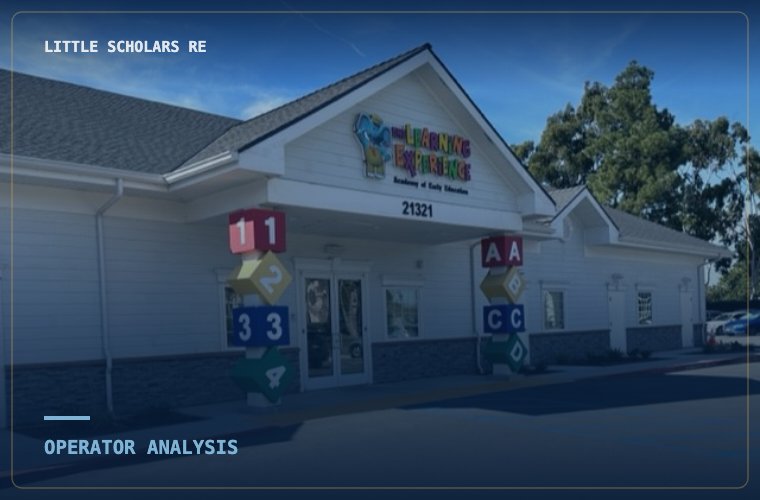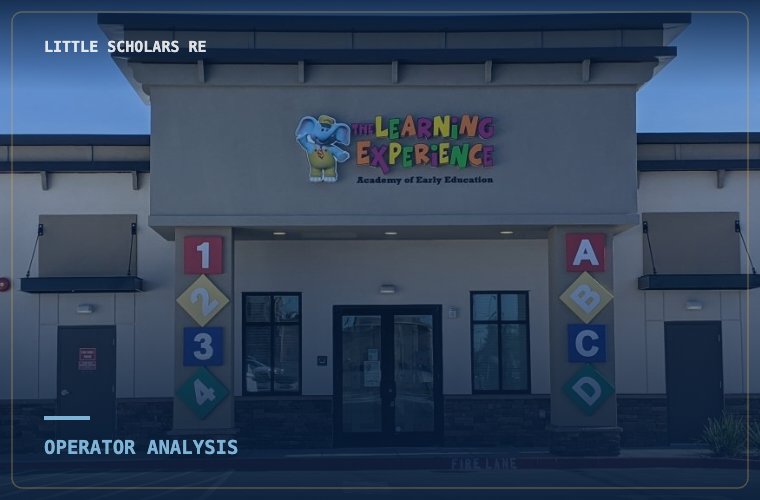
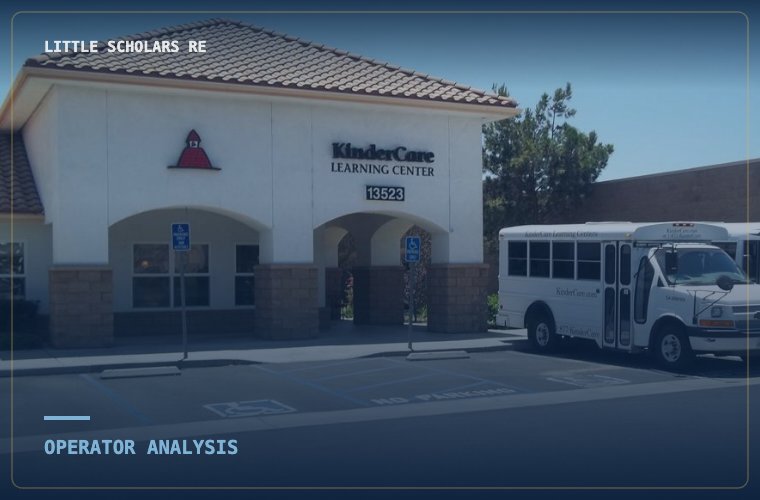
KinderCare went public in October 2024 and now reports its results for all to see. For anyone who owns, leases to, or competes with the nation's largest childcare operator, those filings are a roadmap.
The IPO that opened the books
On October 10, 2024, KinderCare Learning Companies (NYSE: KLC) completed its IPO, selling 27.6 million shares and raising roughly $616 million in net proceeds — the bulk of which went to repay about $608 million of debt. After years under private ownership, the largest U.S. childcare operator became a public company with quarterly disclosure.
That transparency is a gift to the rest of the industry: KLC's filings now reveal, in detail, how the biggest player prices, enrolls, and manages its real estate.
The scale, in numbers
KinderCare reported fiscal 2024 revenue of about $2.66 billion, with income from operations of $79.3 million. It operated roughly 1,574 early childhood education centers plus about 1,025 before- and after-school sites under its Champions brand, with capacity to serve over 200,000 children.
Fiscal 2025 revenue ticked up about 2.6% to roughly $2.73 billion. But the company also posted a net loss for the year — a reminder that scale and revenue growth don't automatically translate into bottom-line profit in a labor-intensive business.
Where the pressure is
The strain is enrollment and cost, not demand. Into 2026, KLC reported early childhood enrollment down roughly 3% year-over-year, pressuring profitability even as tuition rose. Q4 2024 had already shown the tension: revenue up 4.7% to $647 million, but an operating loss of $89.3 million in the quarter.
Leadership also changed — the company announced the return of Tom Wyatt as CEO in early 2026 — the kind of move that often accompanies a renewed focus on occupancy and operational discipline.
What management actually said
The most useful disclosure for property owners is qualitative, and it lives in KLC's Management's Discussion & Analysis and quarterly earnings commentary. In KLC's first report as a public company (Q3 2024, revenue up 7.5% to $671.5 million), CEO Paul Thompson pointed to the strength of the company's national scale across some 2,500 community-based centers. Management has been explicit that well-located, purpose-built facilities continue to outperform and remain central to its strategy, while secondary or underperforming assets are evaluated more critically.
Translated, that is a pricing message from the largest buyer of childcare locations in the country. Strong demographics, functional buildings, and proven enrollment keep an asset in demand. Obsolescence — bad location, dated layout — invites scrutiny at renewal.
Diversification as a credit strength
KLC's Champions before- and after-school business and its employer-sponsored B2B channel matter to landlords even though they're capital-light. A tenant with multiple resilient revenue streams is a safer tenant, which strengthens the credit behind its full-day center leases.
When you underwrite a lease backed by an operator like KLC, you're underwriting the whole enterprise — and diversification makes that enterprise sturdier.
What to do with this
If your center is leased to or competes with KinderCare, position on the attributes its own filings reward: enrollment durability, location quality, and a building suited to modern operations. Those are the same attributes that compress your cap rate at sale.
We translate operator disclosures like KLC's into concrete guidance on what your specific asset is worth, and to which buyers.
Find out what your school is worth.
A confidential, no-pressure valuation from a broker who has owned, operated, and sold childcare centers for nearly 40 years.

Alan Stahl
Founder & CEO of Little Scholars Real Estate. Alan has owned, operated, and brokered childcare centers for nearly 40 years, with 80 transactions closed across 18+ states. Meet Alan and the team →