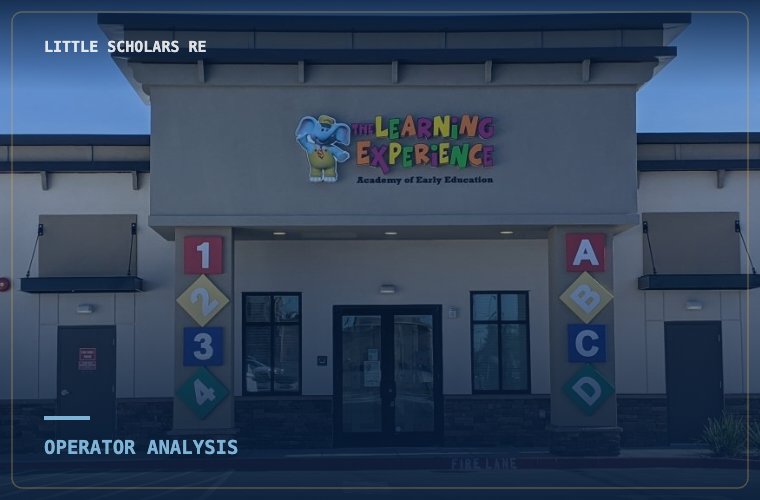
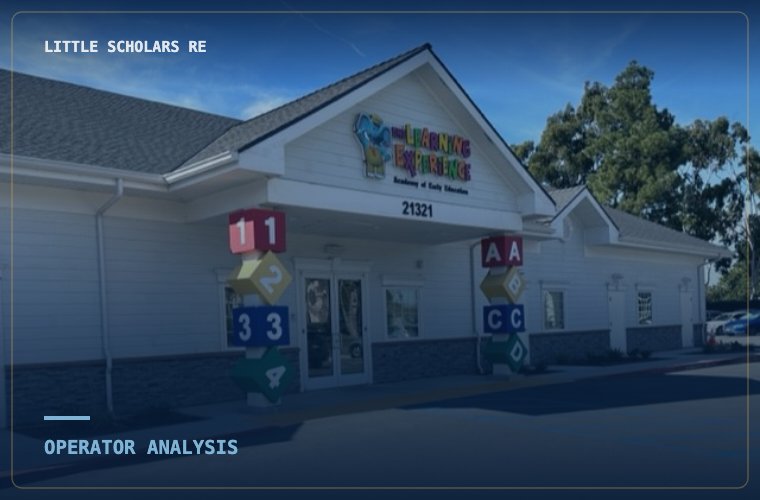
On July 1, 2025, private equity firm Harvest Partners acquired a majority of The Learning Experience from Golden Gate Capital. The deal is a window into how capital values childcare platforms — and what it means for the real estate underneath them.
What happened
On July 1, 2025, Harvest Partners — a New York PE firm founded in 1981 with more than 40 years investing in middle-market companies — completed a majority acquisition of The Learning Experience (TLE) from Golden Gate Capital. Terms were not disclosed.
Critically, this was not an exit for management. Co-founder and CEO Richard Weissman and his team continue to lead TLE and remain significant owners, and Golden Gate retained a minority position. That structure — management rolling equity, the prior sponsor staying in — signals conviction that the growth story is far from over.
The platform Harvest bought
Founded in 2001 and headquartered in Deerfield Beach, Florida, TLE had grown to more than 430 schools across the U.S. and U.K., with roughly 240 additional locations in development and over 52,000 children enrolled, from six weeks to six years old.
Over Golden Gate's ownership, TLE reportedly more than tripled systemwide sales and expanded internationally and digitally — including its 'Bubbles and Friends' intellectual property. It was ranked the No. 1 childcare franchise by Entrepreneur and the No. 1 education franchise by Franchise Business Review in 2025.
Why a PE firm pays up for a childcare franchisor
Harvest described early childhood education as a priority sector it had pursued for several years. The appeal is structural: a recognizable brand, a proprietary curriculum, recurring tuition revenue, and a franchise model that grows the footprint largely with franchisees' capital rather than the franchisor's.
That capital-light growth, paired with essential, undersupplied demand, is exactly the profile institutional investors want — and it's why childcare platforms now trade hands among brand-name PE firms.
What it means for the real estate
Here is the part that matters to property owners: a fast-growing franchise brand backed by deep-pocketed capital is a demand engine for new, purpose-built real estate. With 240+ locations in development, TLE needs sites — and franchisees need landlords and developers to deliver them.
For a developer, an expanding brand on a long-term lease, often with a franchisee or corporate guaranty, is a financeable, valuable asset. For an owner near a growth corridor, brand expansion can be a direct source of demand for your building or land.
The pattern this deal confirms
TLE's sale is one data point in a broader wave: capital is consolidating childcare from the top, paying premium multiples for branded platforms with durable demand. Each such transaction validates the asset class and deepens the buyer pool for quality real estate.
When you understand who is buying these platforms and why, you understand who will ultimately want — and pay for — the centers they operate from.
The takeaway for owners and developers
If you own real estate leased to a growing brand, or land in a market a brand is targeting, deals like Harvest–TLE are a tailwind. They expand the universe of well-capitalized tenants and buyers competing for quality childcare property.
Having developed and brokered childcare real estate for nearly 40 years, we help owners and developers position their assets to capture exactly this kind of brand-driven, institutionally-funded demand.
Find out what your school is worth.
A confidential, no-pressure valuation from a broker who has owned, operated, and sold childcare centers for nearly 40 years.

Alan Stahl
Founder & CEO of Little Scholars Real Estate. Alan has owned, operated, and brokered childcare centers for nearly 40 years, with 80 transactions closed across 18+ states. Meet Alan and the team →