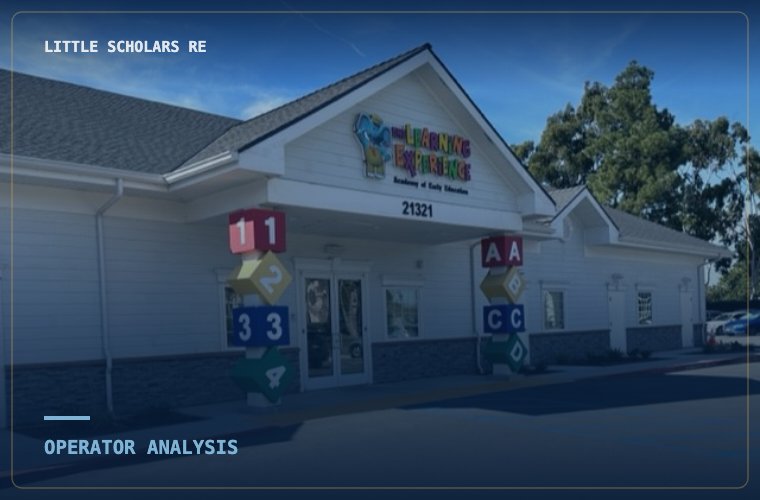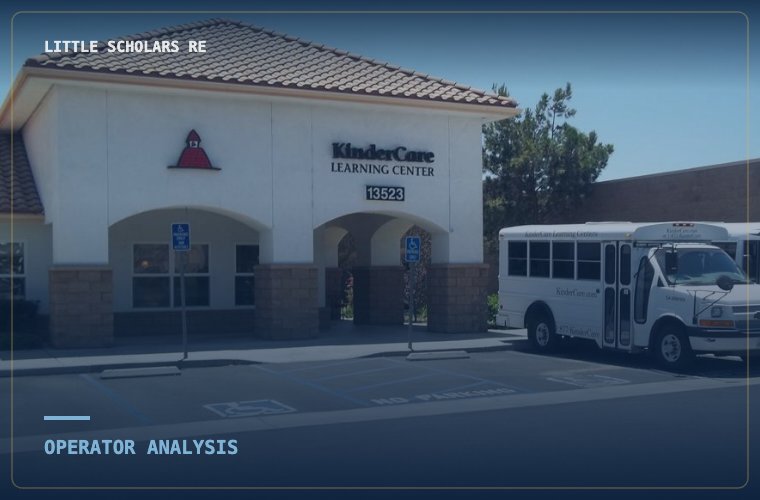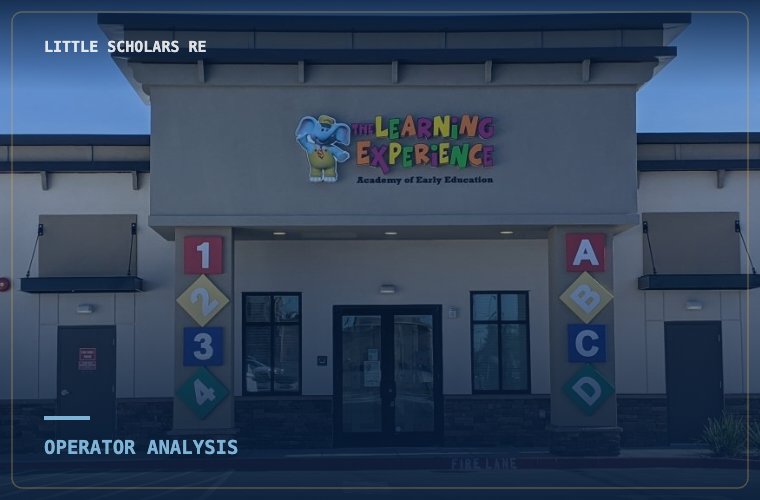
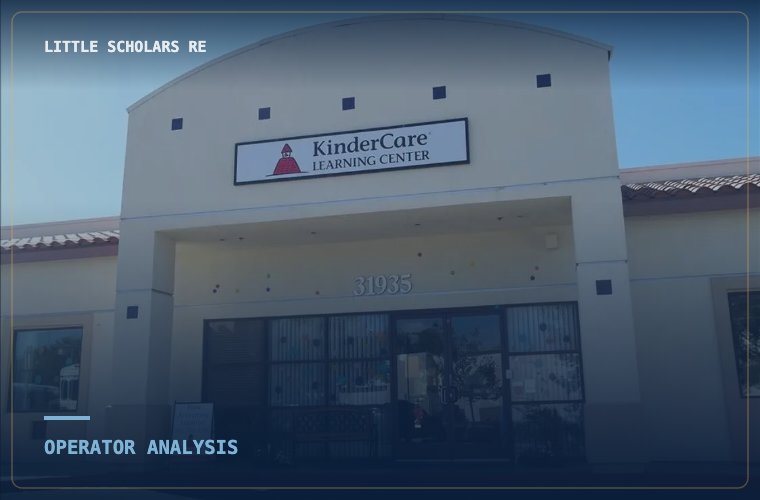
When KinderCare guides to softer occupancy while Bright Horizons grows double-digits, it isn't a mixed signal — it's a lesson in which assets hold value and which face pressure.
Two operators, two trajectories
The divergence is instructive. KinderCare reported early childhood enrollment down about 3% year-over-year heading into 2026, pressuring profitability. Over the same stretch, Bright Horizons grew revenue 9–12% per quarter, powered by employer-funded back-up care and center enrollment gains.
Same industry, very different results — driven by business model, occupancy, and the quality and location of the underlying centers.
Dispersion is the story
Occupancy guidance is an average across hundreds or thousands of centers; it masks enormous variation. Soft average occupancy widens the gap between well-located, well-enrolled centers and marginal ones. The strong assets keep their pricing power; the weak ones get repriced or culled.
Even as KinderCare guided cautiously, listings for institutional-quality childcare assets rose about 14% and cap rates held near 6.9% — proof that quality real estate stayed in demand.
What it means for your asset
The question is never 'what is the industry doing' — it's 'where does my specific center sit in that distribution.' A full center in a strong market behaves nothing like the sector average.
If your center is on the strong side of the curve, this is a favorable window to harvest value while buyers still pay up for quality. If it's marginal, there are concrete steps — lease, enrollment, positioning — to improve it before a sale.
Acting on it
We benchmark your center against the real distribution — not the headline average — and recommend whether to sell into current pricing or strengthen the asset first.
Reading operator guidance correctly is the difference between reacting to fear and acting on opportunity.
Find out what your school is worth.
A confidential, no-pressure valuation from a broker who has owned, operated, and sold childcare centers for nearly 40 years.

Alan Stahl
Founder & CEO of Little Scholars Real Estate. Alan has owned, operated, and brokered childcare centers for nearly 40 years, with 80 transactions closed across 18+ states. Meet Alan and the team →