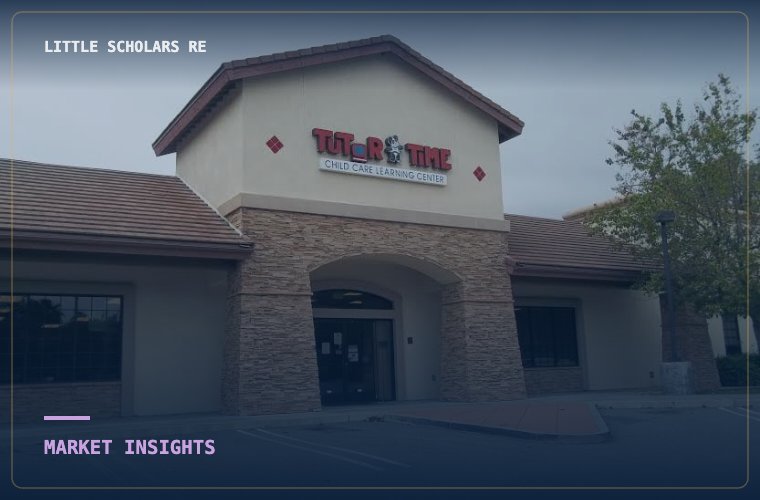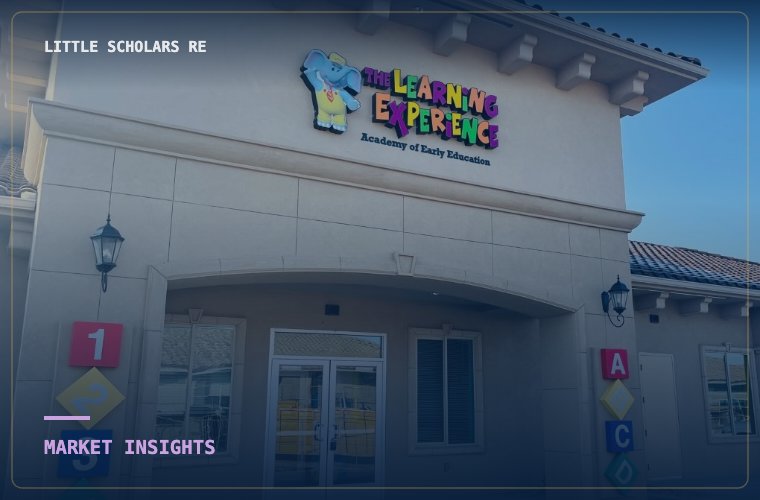
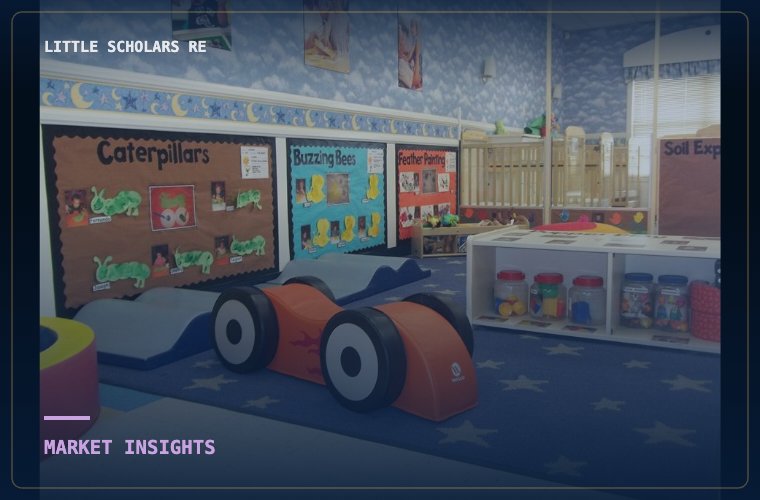
Triple-net childcare real estate went from overlooked to institutional in half a decade. Here's the whole arc — why capital showed up, how the deals get underwritten, and what 611 sold comps say about where the asset class trades now.
An overlooked asset class comes of age
For years investors overlooked childcare because it was unfamiliar, and early-education assets traded at a discount to other single-tenant properties like banks, pharmacies, and quick-service restaurants. What many didn't realize was that some childcare companies are worth billions and back each lease with a full corporate guaranty. The pandemic changed that perception — it put large-scale operators in the limelight and revealed both the sector's essential nature and the government's willingness to support it in a crisis.
The structure did the rest. A triple-net lease shifts taxes, insurance, and maintenance to the tenant, leaving the owner with clean, passive income. Backed by a creditworthy operator on a 15- or 20-year term, a childcare center became an appealing source of defensive cash flow — most buildings run 8,000–12,000 square feet on long leases, a manageable size for private and institutional buyers alike.
How a childcare NNN deal gets underwritten
In net-lease investing you are buying the income stream as much as the building, and pricing turns on three pillars: the credit quality of the tenant, the remaining lease term, and rent coverage at the site. A national operator with a corporate guaranty carries very different risk than a single independent owner — and the market prices that difference consistently.
A long remaining term only matters if the center can sustain the rent, so pair the lease analysis with site-level enrollment and rent coverage to confirm the income is real and durable. Watch the structure too: who pays taxes, insurance, and maintenance, and how rent escalates over time. These details drive your actual yield.
The repricing test — and how childcare passed it
The rate shock of 2023–2024 was the asset class's first real stress test. The broader single-tenant net lease market absorbed higher interest rates with cap rates drifting up across most retail categories; deals took longer and buyers got selective. Childcare held its ground on a feature many net-lease tenants lack: the service is essential and hard to replace. Investors increasingly treated well-located centers as essential-services real estate — closer in spirit to medical or grocery-anchored assets than to discretionary retail.
The spread widened, though. Centers leased to national operators on long terms with corporate guarantees kept a deep buyer pool and premium pricing, while shorter leases or weaker guarantors saw wider cap rates and longer marketing times. Lease structure proved to be value: extending a lease or strengthening a guaranty before going to market could meaningfully tighten the cap rate a buyer would accept.
Where it trades today
Our sold-comps dataset now covers 611 childcare transactions across 42 states. The national median sold cap rate is 7.14%, with most deals clearing between roughly 6.7% and 7.7%, at a median of $322 per square foot. Tenant credit still sets the spread: KinderCare-tenanted buildings have traded around a 6.67% median cap and Kiddie Academy around 6.53%, while The Learning Experience — the most-traded brand in the dataset — clears at a 7.00% median cap but the highest price per foot, around $480. At the value end, La Petite Academy buildings trade near $218 per square foot on durable Learning Care Group credit.
You can explore the underlying data yourself: the full comps database is at littlescholarsre.com/comps, per-brand analyses live on our market data pages, and metro-level cap rates, real 2025 tuition rates, and demographics are on each market page.
What it means for owners and investors
For owners of quality assets, the lesson of the last five years is that lease structure is value — the work you do on term, guaranty, and rent coverage before marketing shows up directly in the cap rate. For investors, childcare's defensive appeal is intact: durable demand, irreplaceable locations, and income that holds up when discretionary retail wobbles. In a niche this thin, the right broker — one who knows the operators and what's coming to market — is the difference between finding a sound asset and overpaying for an average one.
Find out what your school is worth.
A confidential, no-pressure valuation from a broker who has owned, operated, and sold childcare centers for nearly 40 years.

Alan Stahl
Founder & CEO of Little Scholars Real Estate. Alan has owned, operated, and brokered childcare centers for nearly 40 years, with 80 transactions closed across 18+ states. Meet Alan and the team →